The Evolution of Video Editing and VFX in Bangladesh: From Analog Splicing to Global Blockbusters
How thirty years of technological revolutions—from BFDC Steenbeck flatbeds to Toofan's dual-character VFX and ACES color pipelines—transformed Dhaka into South Asia's most dynamic post-production frontier.

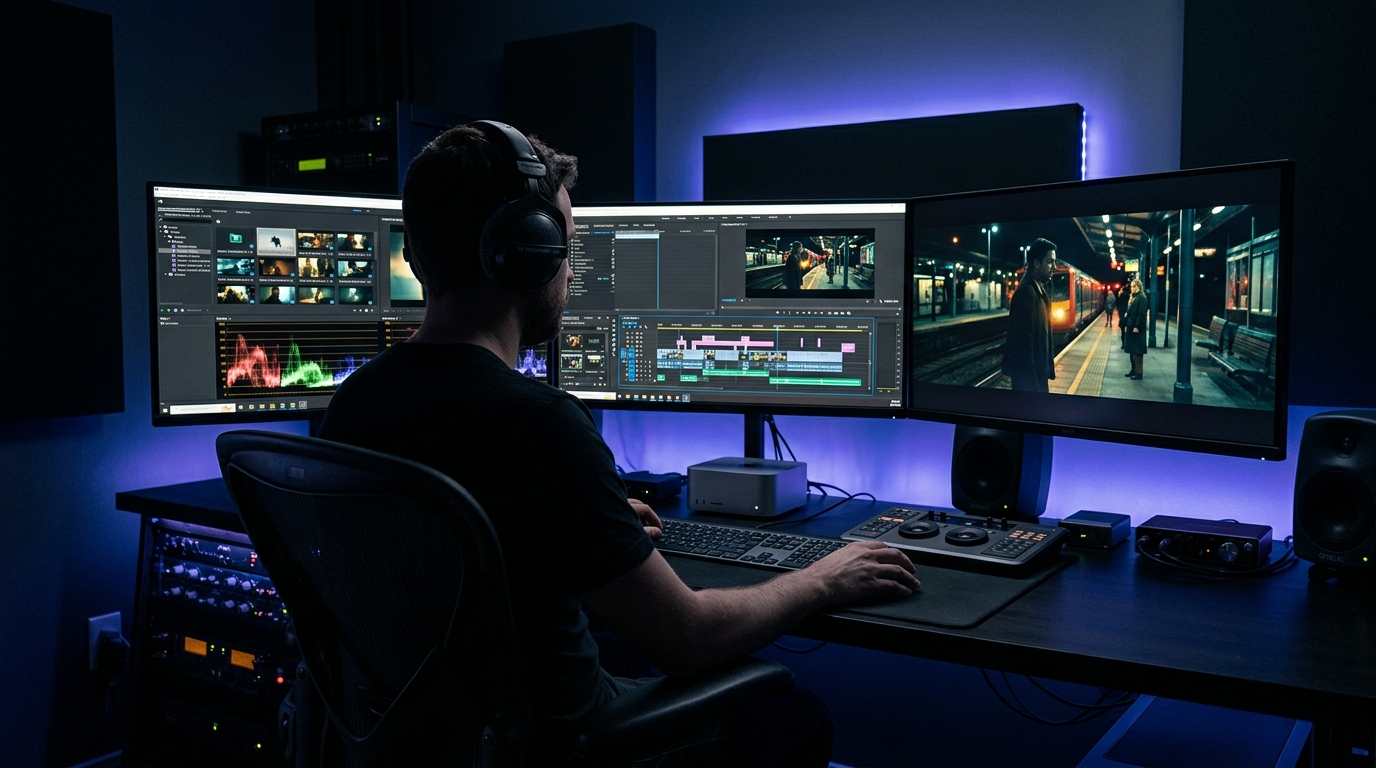
Where narrative tension is engineered: multi-monitor timeline conforms, ACES color reference grading, and surround acoustic mixing at JAP Studios.
1. The Invisible Art: When Pacing Dictates Culture
Cinema is often remembered by its faces and its words—the actor’s gaze, the director’s composition, the writer’s cadence. Yet, in modern visual storytelling, the emotional subconscious of a film is decided in the dark: inside the quiet, insulated walls of the editing bay.
For decades, South Asian commercial cinema treated post-production as a mechanical afterthought—a linear assembly line where footage shot on set was simply stitched together to match an audio track. However, over the past decade, a profound transformation has swept through Bangladesh. Driven by international streaming standards, discerning digital audiences, and a new generation of technical auteurs, video editing and visual effects (VFX) have evolved from manual labor into the strategic heartbeat of Dhallywood’s modern creative economy.
2. The Celluloid Darkroom: The Steenbeck & BFDC Era (1970s–1990s)
To understand where Bangladeshi post-production stands today, one must look at the tactile, physical roots of the craft at the Bangladesh Film Development Corporation (BFDC) in Tejgaon, Dhaka. Through the golden decades of celluloid, editing was an irreversible physical craft.
Master film editors like Aminul Islam Mintu, Shahidul Haque, and their contemporaries worked on heavy German Steenbeck flatbed editing tables. Positive 35mm film prints ran horizontally across rotating prisms synchronized with magnetic audio perforations. An edit was made with a physical razor blade splicer and adhesive tape. If a slice was miscalculated, the film emulsion was damaged.
Visual effects during this era were almost exclusively optical or in-camera. Superimpositions were achieved via double exposure on the camera negative, while practical pyrotechnics and squibs handled action sequences. Because physical prints had to be duplicated at the laboratory, turnaround times for theatrical releases stretched across months.
The Evolution Matrix (1970s – 2026)
Select an era below to inspect the camera sensors, editorial suites, and VFX breakthroughs that defined it.
Theatrical Blockbusters & Heavy VFX
50+ Crore BDT Scale, Pan-Indian Theatrical Competition & Dual-Role Split Conforms
ARRI Alexa 35, Sony Venice 2, Cooke Anamorphic / Master Anamorphic Lenses
DaVinci Resolve Studio 19, Foundry Nuke, Autodesk Maya, Blender 4.x, Pro Tools HDX
Seamless Dual-Character Compositing (Toofan), CG Period World-Building, Minigun Ballistics
ACEScc Hollywood Master Pipelines, Dolby Vision HDR, DCI Theatrical DCP Encoding
3. The Tape Boom & The DSLR Rebellion (2000–2019)
The turn of the millennium brought the first true democratization wave to Dhaka with the arrival of digital non-linear editing (NLE). Betacam SP, U-matic, and DVCAM tapes replaced film reels for television, while early Apple Final Cut Pro 7 and Avid Media Composer workstations began appearing in commercial production houses.
The defining turning point, however, occurred around 2010 with the Canon 5D Mark II and the subsequent arrival of affordable cinema sensors from Blackmagic Design and RED Digital Cinema. Suddenly, independent filmmakers could capture cinematic shallow depth of field on shoestring budgets.
This era also marked the birth of dedicated boutique post-houses. When I joined Alpha-i Studios Ltd. in 2014 as Chief Video Editor, our primary objective was to break the flat, over-saturated television look that plagued Bangladeshi screens. We began pioneering DaVinci Resolve Studio color-managed workflows, implementing 3D LUTs, and introducing micro-frame action pacing inspired by modern international cinema.
4. The Watershed: How OTT Demanded Narrative Discipline (2020–2023)
When the 2020 global lockdown closed movie theaters across Bangladesh, the country’s entertainment ecosystem faced an existential crisis. That crisis triggered the single most consequential evolution in Dhallywood’s history: the OTT Streaming Boom.
The breakthrough arrived with August 14 (2020), directed by Shihab Shaheen, which I had the privilege of lead editing. Released on Binge during peak confinement, it was a gritty, uncompromising psychological crime noir that departed violently from traditional romantic natok tropes. The storytelling demanded ruthless editorial economy: non-linear timeline cross-cuts, chilling acoustic pauses, and visceral rhythmic transitions. Its viral national success proved that Bangladeshi audiences were hungering for complex, adult narrative pacing.
Over the next three years, platforms like Chorki, Hoichoi, and Bongo raised the technical bar even further. In Syndicate (2022), our editorial team faced a unique creative brief: how to translate the protagonist’s neurodivergent sensory condition into visual and audio rhythms. By combining rapid-fire micro-cuts with disorienting sound pans, the edit made viewers experience the character’s psychological overload in real time, earning a nomination for Best Editing at Blender’s Choice – The Daily Star OTT Awards.
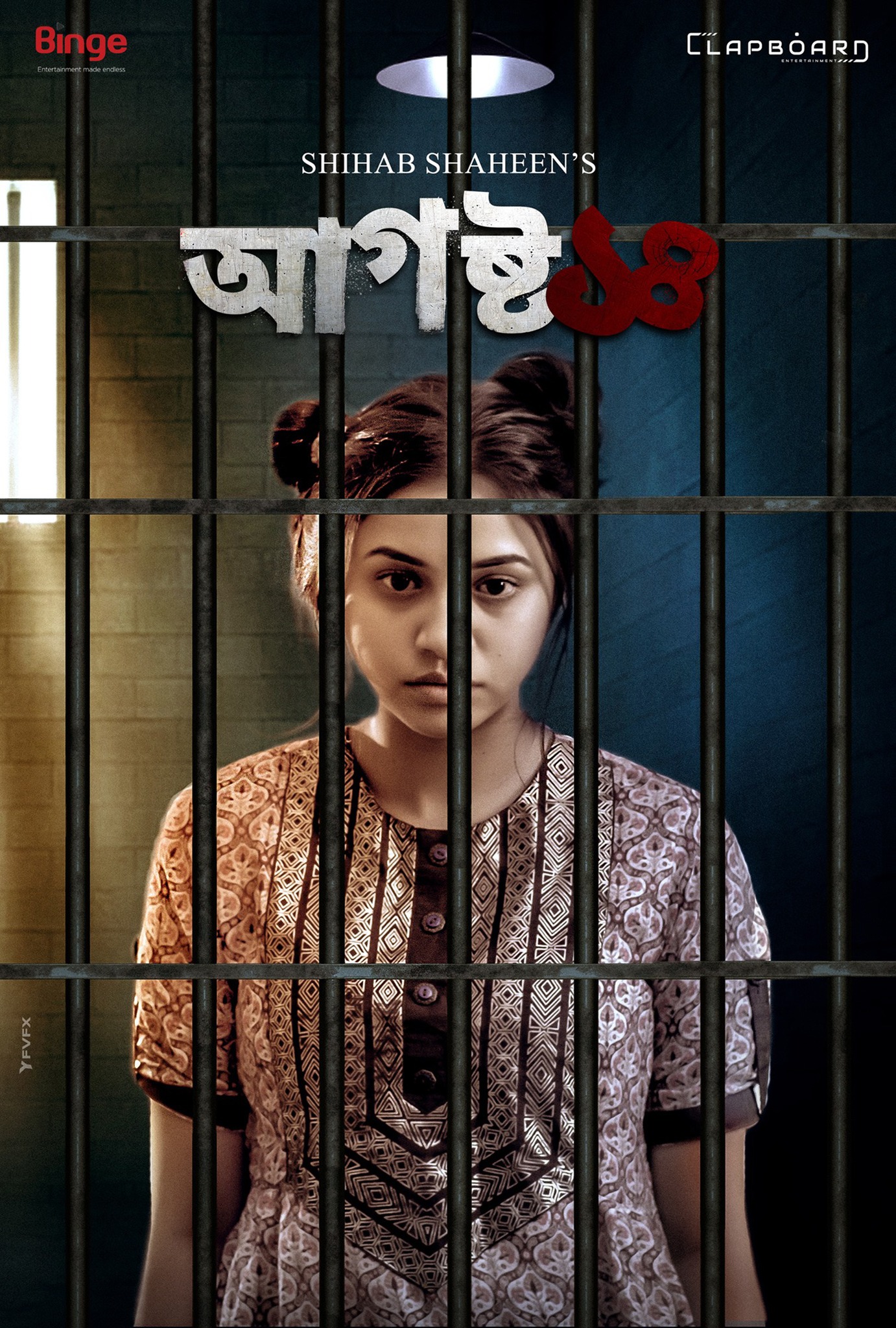
August 14
Pioneering the non-linear psychological crime noir format in Bangladesh with taboo-breaking thematic material under tight lockdown production schedules.
Architected cold, desaturated tension cuts, cross-cutting between dual interrogations and traumatic childhood flashbacks with razor-thin sound dropouts.
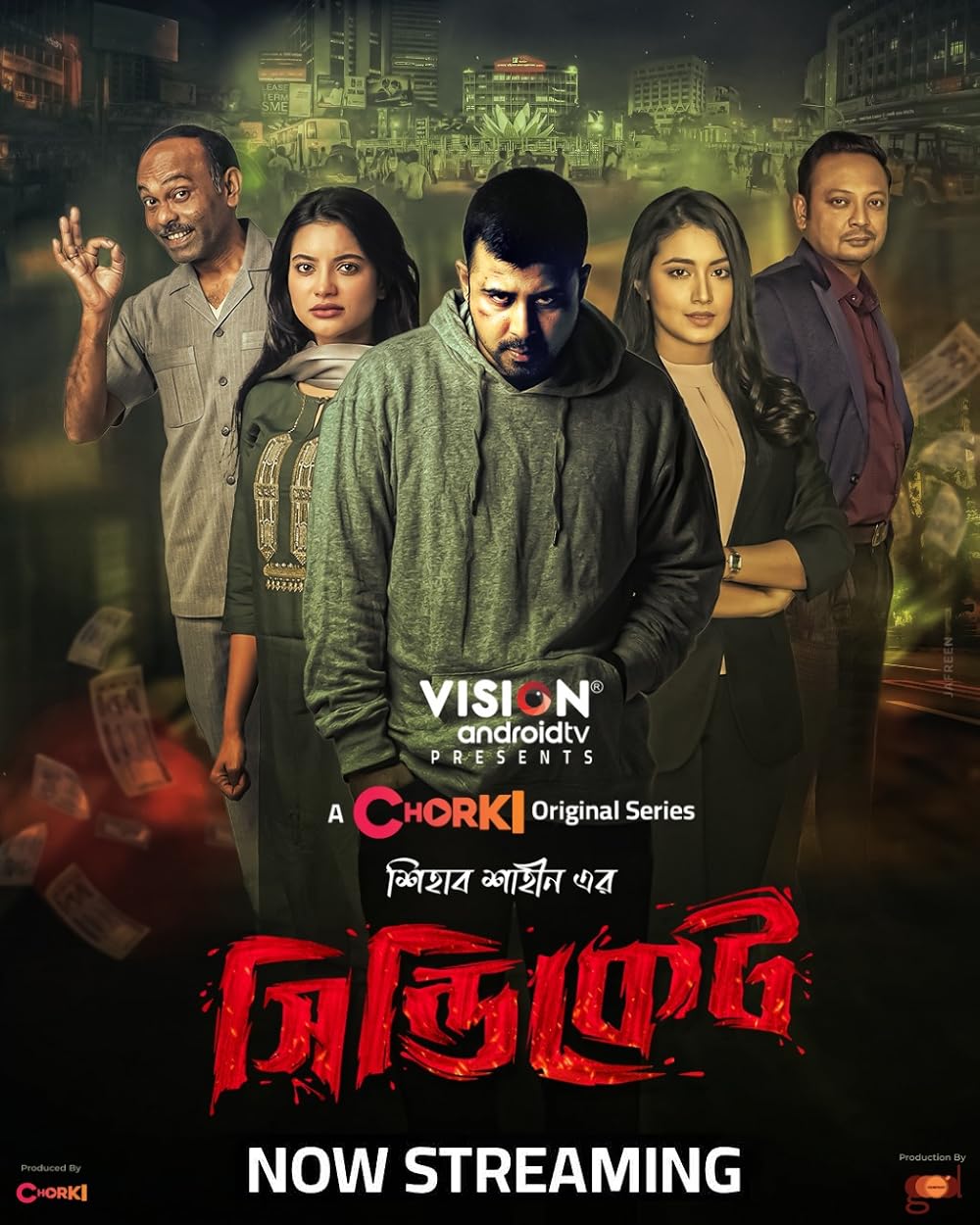
Syndicate
Translating a neurodivergent detective’s sensory processing sensitivity and obsessive patterns into an immersive commercial crime thriller.
Constructed kinetic rhythmic cuts synchronized with subtle chromatic aberration pulses, ticking sound design motifs, and claustrophobic spatial framing.
5. The Modern Spectacle: World-Building in Toofan & Surongo (2024–Present)
If the OTT wave proved that Bangladeshi editors could command tension, the theatrical releases of Surongo (2023) and Toofan (2024) proved that local post-production teams could execute global commercial blockbusters capable of shattering international box office records.
In Toofan (2024), directed by Raihan Rafi and co-post-supervised by our team, Dhallywood crossed the threshold into heavy, seamless visual effects:
- Dual-Role Character Compositing: Megastar Shakib Khan portrayed two opposing characters—the ruthless mobster Toofan and the aspiring actor Shanto. To place both characters in the same frame seamlessly, we utilized motion-control plate matching, green screen compositing, and body-double head tracking, ensuring natural eye-lines and zero digital halos.
- 1990s Period World-Building: The gritty Dhaka criminal underworld of the 90s was recreated using digital matte paintings, period-accurate street extensions, retro neon billboards, and CG crowd replication.
- High-Octane Minigun Ballistics: The iconic ballroom massacre sequence featured an M134 Minigun firing thousands of rounds. We combined practical pyrotechnic squibs on set with digitally layered muzzle flashes, volumetric smoke plumes, ejecting brass shell casings, and wall fragmentation.
Toofan (2024): Ballroom Minigun Shootout
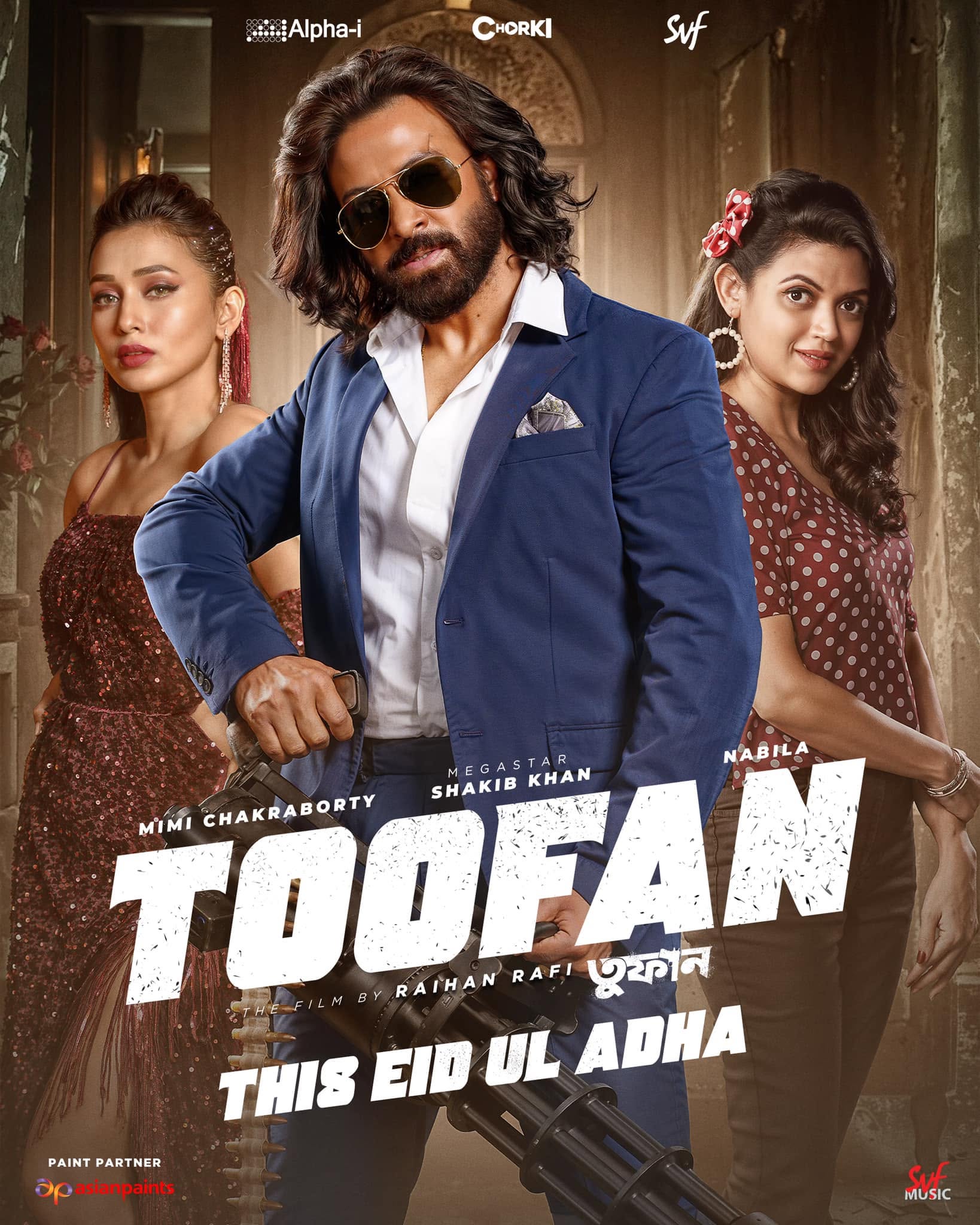
Technical Breakdown: Shakib Khan’s dual-character composite with digitally layered M134 ballistic muzzle flashes, shell casings, and atmospheric debris.
Toofan
Managing massive 8K camera raw conformed timelines, dual-role body-double VFX splits, 1990s CGI world extensions, and global multi-territory theatrical DCP deadlines.
Established an end-to-end ACES 1.3 color and EXR VFX pipeline, coordinating shot handoffs between stunt choreographers, CG artists, and theatrical colorists.
6. The Anatomy of a Modern Studio Pipeline: From RAW Cards to DCI DCP
Today’s high-end post-production facility in Dhaka operates identically to leading studios in Mumbai, London, or Los Angeles. The chaotic, ad-hoc workflows of the past have been replaced by rigorous, hardware-calibrated scientific pipelines.
At JAP Studios, every project follows a strict 6-stage lifecycle designed to eliminate metadata loss, protect dynamic range, and ensure that the creative vision conceived by the director survives uncompromised onto the cineplex silver screen.
The Anatomy of Modern Bangladeshi Post-Production
Click any phase of the workflow to explore the software stack, deliverables, and lead editor protocols.
Tension & Pacing Architecture
Micro-frame precision cutting. Choreographing gunfights, vehicle chases, and psychological confrontation. Audio cues, tactile breaths, and silence are carved directly into the timeline.
- Fine Cut (Picture Lock)
- Pre-Mix Sound Design Track
- VFX Plate Pull List
“Pacing is not speed; pacing is contrast. A 2-minute interrogation scene in Mohanagar 2 feels suffocating because of the rhythm of prolonged stares and sudden acoustic breaks, not because of fast cuts.”
7. The Next Frontier: Virtual Production, AI & Pan-Asian Ambition
As we look toward 2027 and beyond, the technological trajectory of Bangladeshi cinema is accelerating exponentially. Three emerging frontiers will define the next decade of our industry:
Unreal Engine LED Volumes
Replacing traditional green screens with real-time in-camera visual effects (ICVFX) on high-pitch LED walls, giving actors realistic ambient reflections and eliminating post-production spill suppression.
AI-Assisted Conforming
Machine-learning tools automating rotoscoping, voice isolation, and multicam audio sync—freeing editors to focus 100% of their creative energy on narrative tension, dramatic pauses, and character rhythm.
Co-Production Mastering
Seamless pipeline handshakes between Dhaka, Kolkata, Mumbai, and Bangkok. Delivering Dolby Atmos and multi-language regional theatrical prints simultaneously.
8. Conclusion: The Architect Behind the Cut
When audiences walk out of a cinema hall with their pulses racing, or when millions of streaming viewers binge eight episodes in a single night, they are rarely thinking about frame rates, ACES transforms, or subterranean rotoscope splines. And that is exactly how it should be.
The highest achievement of an editor and VFX supervisor is invisibility. When the technical infrastructure is flawless, the technology disappears, leaving behind only raw human emotion, unrelenting suspense, and unforgettable storytelling.
As Bangladeshi cinema expands its footprint onto global streaming feeds and international theatrical circuits, our commitment at JAP Studios remains absolute: to architect the cut with mathematical precision and cinematic soul.
Jobayar Abir Peal
Founder, JAP Studios
With over 12 years of continuous leadership in Bangladeshi entertainment, Jobayar Abir Peal has served as Chief Editor on record-breaking blockbusters including Toofan (50+ Cr BDT), Surongo, Mohanagar 2, Syndicate, and August 14. Through JAP Studios, he directs high-concept fiction and oversees full-pipeline post-production for major studios.